Pre-Seeded Test Data Strategies for API Integration Tests
Layered, versioned seeds and a stateful simulator make API tests repeatable.
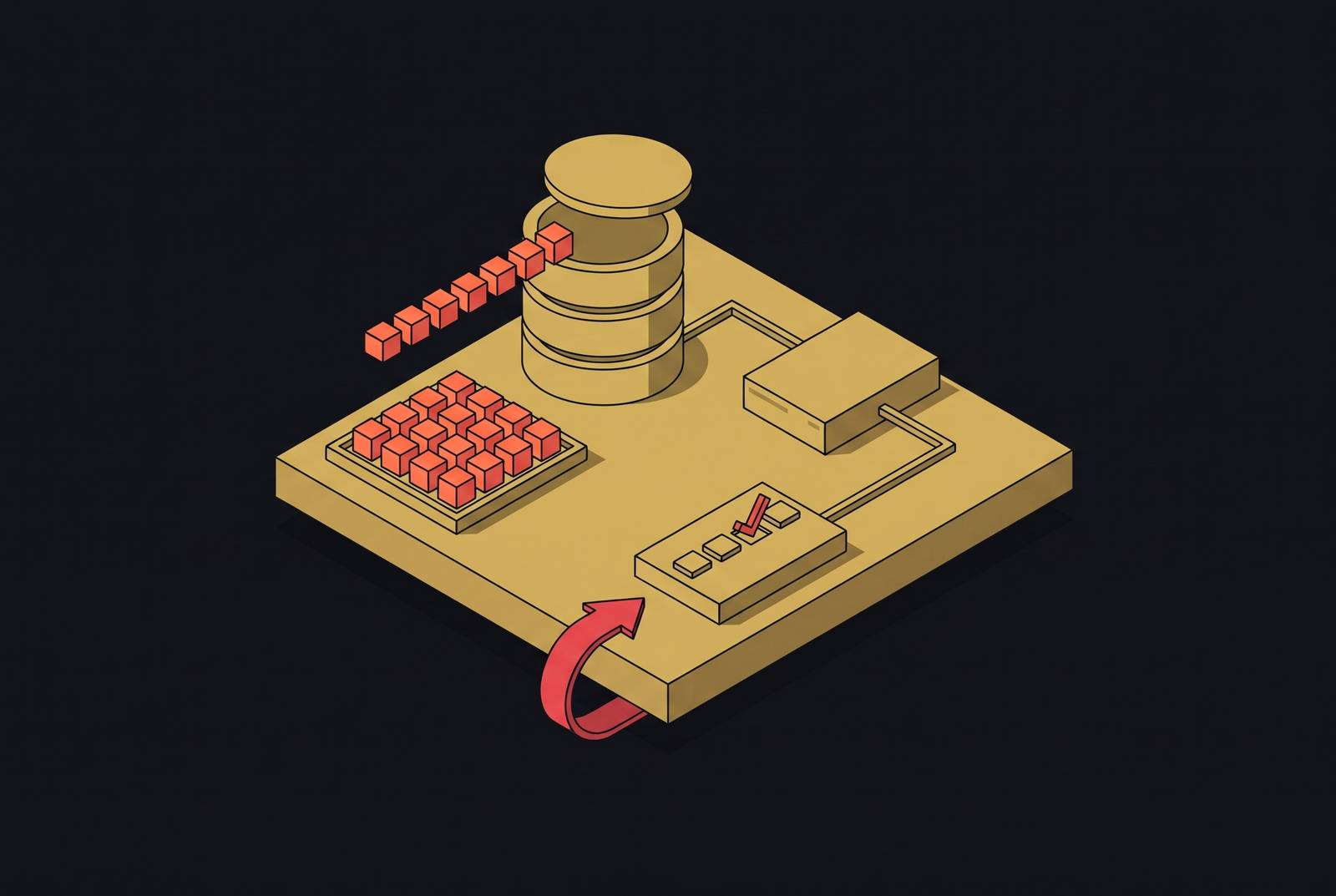
Integration testing against stateful APIs requires a layered seed strategy, with realistic data scoped to each test layer and a locally hosted simulator that preserves changes across sequential calls. Versioned, isolated seeds make runs repeatable without hitting production. Checking against the real API on an ongoing basis makes those results trustworthy by showing that they match both the simulator and the real API.
Why test data, not test logic, is where API integration suites break down
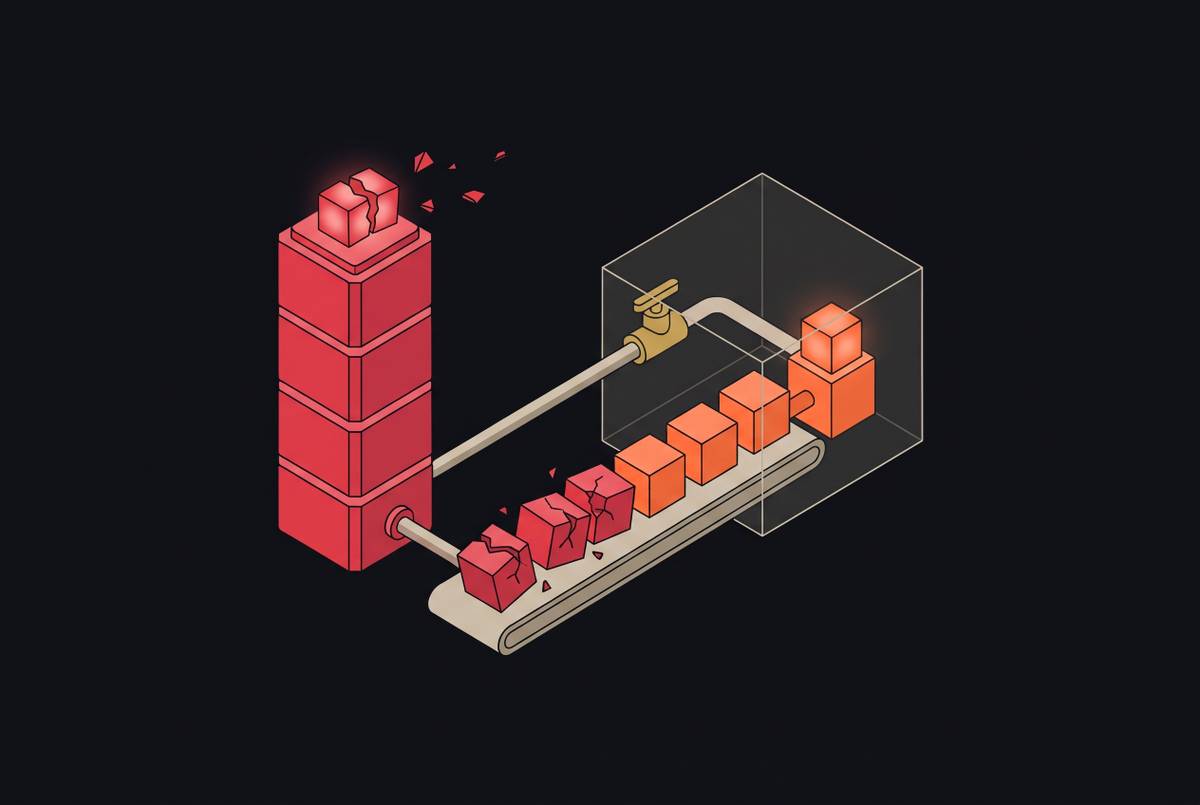
A test passes locally, then returns an unexplained 404 in CI. The assertion has not changed, but the record underneath it has. Stale fixtures, shared records, and starting conditions that do not reflect real use can make results hard to trust even when the framework is correct. They can also produce the more dangerous outcome of a passing test that should have failed. The visible symptom is flakiness, but the defect is often in the data.
Two distinct problems sit behind that symptom. Per-test database setup turns preparation into a speed bottleneck, while shared staging environments accumulate records across runs and developers. One makes the suite expensive to execute. The other makes its result depend on execution history outside the test. Neither problem is solved by adding assertions to an unstable baseline.
What "pre-seeded" actually means across the four test layers
Unit tests use in-memory factories that make data in the needed shape on demand, never touch a database, and disappear when the process ends. Integration tests need a different scope and lifecycle. Their baseline is a containerized database seeded once before the suite, rather than before each test, using curated fixtures that represent records many tests need.
E2E tests require masked production subsets or realistic synthetic datasets that span the full user-visible flow, including cases that narrow happy-path fixtures omit. Static reference seeds are the fourth concern and apply across the test layers. Country codes, pricing tiers, and roles are domain constants applied through repeatable migrations that every environment inherits. These distinctions determine where setup belongs and how long its results should live. A shared fixture file for a data-driven unit test or a database reset before every integration test works against the purpose of its layer.
What makes seed data realistic enough to trust
Realism requires coverage. Missing required fields, wrong types, boundary values, unicode and special characters, and maximum-size payloads exercise paths that well-formed fixtures never reach. A suite can contain many tests yet repeatedly validate the same narrow input class. Realistic seeds also need users in multiple roles, records in each relevant status, and relationships such as a customer with no orders and one with many.
OpenAPI or AsyncAPI schemas can supply boundary values, equivalence classes, and negative cases, with generation following changes to the contract. The schema provides structure, but relationships still need attention. A valid customer and a valid order do not establish that the seeded relationship exercises the intended workflow. The target is synthetic data that follows real code paths without exposing production PII, rather than trivially fake strings such as “test123” repeated throughout the suite.
Why stateless fixtures fail sequential API workflows
Even realistic fixtures cannot show that one request changed what the next request sees. Consider a mock configured to return a hardcoded customer from GET /customers/42. A test first creates the customer, then fetches it, and receives the expected response. The apparent consistency proves nothing about creation. The mock returns that customer whether the preceding POST created it or not, because its answer comes from configuration.
An order workflow exposes the same gap more clearly. The application creates an order, fetches it, cancels it, and fetches it again expecting a changed status. A fixed fetch response either keeps returning the original status or returns a preconfigured cancelled status without proving that cancellation caused it. Preloading every intermediate response scripts the expected story. It does not test the causal link between operations, so sequencing bugs can remain invisible.
Record-and-replay offers a middle path for teams already using a live API. Captured production interactions can be replayed in CI without repeating those live calls. However, the recording remains a fixed account of earlier behavior. It cannot express states absent from the original capture, and its cassettes drift as the API evolves.
How can integration tests preserve state across API calls?
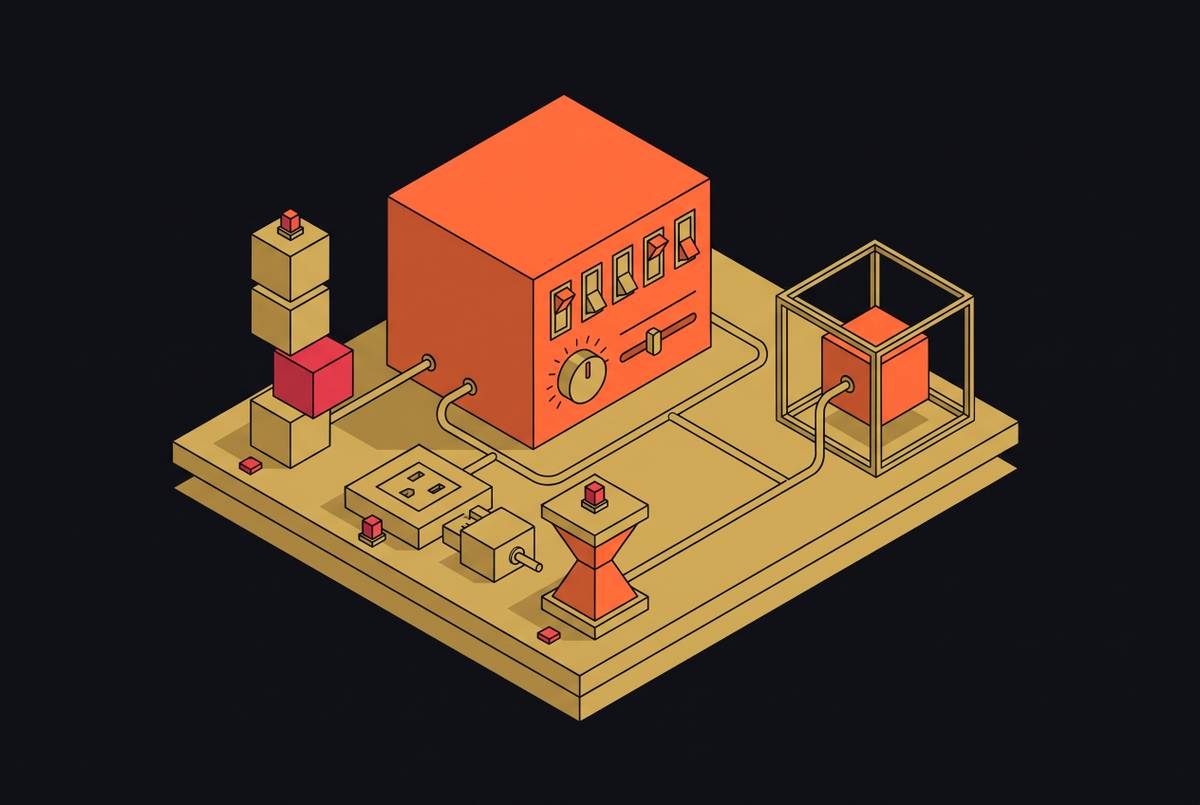
A stateful simulator maintains a living model. Adding a record changes what a later list request returns, and deleting it changes what a later fetch can find. Request history becomes part of the test result. This allows a suite to establish that cancellation appears in the next fetch, deletion produces a 404 rather than a 200, or a payment event changes a subscription’s status. The distinction is architectural.
An empty environment needs setup code to build users, records, and relationships before the test reaches the behavior it is meant to check. A populated simulator lets the test begin there. For CI, hosting it locally also removes calls to a third-party sandbox, with their latency and rate limits, and avoids dependence on live credentials. Those benefits give the testing team control over the run’s starting state and the environment it runs in, though they alone do not show that the simulator is accurate.
How vendor sandboxes introduce drift that locally hosted simulators avoid
The Kalshi Python SDK’s nightly spec-drift detection caught an October 2026 mismatch between its contract suite and upstream OpenAPI/AsyncAPI. That incident illustrates the underlying risk of relying on an external contract without watching for change. Compatibility can erode outside the application’s own release cycle. Vendor sandboxes introduce a related dependency because their responses, rate limits, and webhook payloads can diverge from production independently of the testing team.
Stripe has test card numbers, simulated webhook events, and an API environment that largely matches the live one, but it also lists limits. Its legacy test mode sandbox supports V1 and some of V2, and sandbox testing has no support for IC+ pricing. Delivery behavior differs too. Stripe retries sandbox events three times over a few hours, while live-mode retries can continue for up to three days. Its webhook documentation also warns that event order is not guaranteed and duplicate deliveries can occur.
PayPal provides test buyer and seller accounts in a sandbox that mirrors its live environment. Its webhook guide requires an HTTP 2xx acknowledgment and describes repeated delivery attempts over several days when acknowledgment fails. Official environments therefore still require deliberate recovery tests. A locally hosted simulator avoids dependence on their availability and changing test state, but avoids behavioral drift only when it is continuously verified against the real API before release.
Seeding strategies for specific API categories: payments, webhooks, and event-driven flows
Payment API seeds need records in pending, succeeded, failed, and refunded states because checkout is a sequence of transitions. Stripe test clock objects support scenarios such as subscription trials expiring and invoice cycles advancing without waiting for real time. Payment webhook scenarios must include duplicate delivery and out-of-order arrival, with idempotency checks and deduplication tested as part of recovery. Intermittent endpoint failures and partially completed workflows must also be represented so that safe resumption is exercised.
Webhook seeds need both event payloads and the records those events affect. GitHub scenarios include push, pull_request, issue_comment, workflow_run, and release, together with retry, duplicate delivery, replay, and signature verification cases. Resend’s event types span email.sent, email.delivered, email.delivery_delayed, email.bounced, email.complained, email.opened, email.clicked, email.failed, email.scheduled, email.suppressed, and email.received. A sent-only fixture misses bounce and deliverability handling. For a bounced email test, a seeded recipient record makes the event meaningful.
Collaboration APIs need populated workspaces with Slack-style seeds that include users, channels, messages, files, and permission relationships so that tests reach read, update, and permission-enforcement paths. An empty workspace mostly exercises creation. Ephemeral, isolated replicas provide a known starting state for integration code or agents, while deterministic state-change diffs make the resulting changes verifiable.
Fault injection as a first-class seeding concern, not an afterthought
Happy-path seeds leave error handling and fallback logic untouched. A mock-based suite can pass while those paths remain broken because no configured response ever reaches them. The seed plan should therefore include temporary API unavailability, timeouts and latency, 429 rate-limit responses, 503 service errors, duplicate webhook delivery, and partial completion. Failures need context as well as response codes. An interruption during a workflow tests recovery from a different starting state than a rejection before any work begins.
Agents can proceed on a false assumption when they fail to validate a tool result, so tool-layer injection must test whether the agent acknowledges an error. Booz Allen Hamilton’s fault categories for LLM applications include temporarily inaccessible external services and delays in asynchronous tool interactions. Individual faults are not always sufficient, however. Critical paths should also include composed failures, such as a 429 and a tool timeout occurring together, because isolated cases do not exercise their combined effect.
Keeping seed data deterministic and versioned across a CI pipeline
Fixture files, factory definitions, and seed scripts belong in the same repository as their tests, with the same review and merge discipline. A correctly structured pipeline begins with an isolated environment, applies schema migrations and the seed baseline, and then runs the suite. An ephemeral container gives each run a fresh database that is destroyed afterward. This keeps preparation scoped to the run without allowing concurrent runs to inherit each other’s changes.
Seed scripts must also tolerate repeated execution. Upserts or conditional inserts such as ON CONFLICT DO NOTHING prevent duplicate reference records and uniqueness failures when setup runs again. Migration tools such as Liquibase or Flyway apply the baseline consistently across local, CI, and ephemeral environments. Versioning makes schema incompatibility visible at fixture loading. That is a more diagnostic failure than an assertion breaking later against data that never loaded correctly.
Ephemeral containers are not the only isolation pattern. Tenant-based partitioning assigns each run a namespaced subset of a shared store, while test-scoped transactions roll back changes during teardown. The choice depends on test volume and infrastructure cost, but concurrent runs must not see one another’s data. Shared staging does not provide that boundary by default. Per-branch or ephemeral environments are therefore the appropriate model for tests that gate merges, rather than a staging database whose accumulated history influences the result.
How continuous fidelity verification prevents the entire strategy from silently rotting
A deterministic simulator can be consistently wrong. Hand-maintained stubs drift whenever the real API changes without a corresponding update, while spec-driven tools also become stale if generation does not follow upstream changes. Realistic seeds may make a passing suite more persuasive despite that mismatch because its local world appears complete. Fidelity is the link between internal consistency and behavior that the application will encounter outside CI.
The SDK’s drift-detection methodology provides a concrete model for watching that link. Hard-fail contract tests run on every commit, distinguish additive drift from removal drift, and are supplemented by nightly checks for upstream changes that do not trigger a commit. Release verification adds another necessary boundary. A simulator should be tested against the real API before every release, because periodic checks alone leave windows in which developers can build tests against stale behavior. Published fidelity scores can make the degree of response agreement auditable.
The final criterion is therefore not how much seed data a simulator contains. It is whether that data evolves through requests according to a model that still matches the real API.