Fully Controllable API Simulators as First-Class Test Infrastructure
Stateless mocks pass broken integrations; stateful simulators catch them.
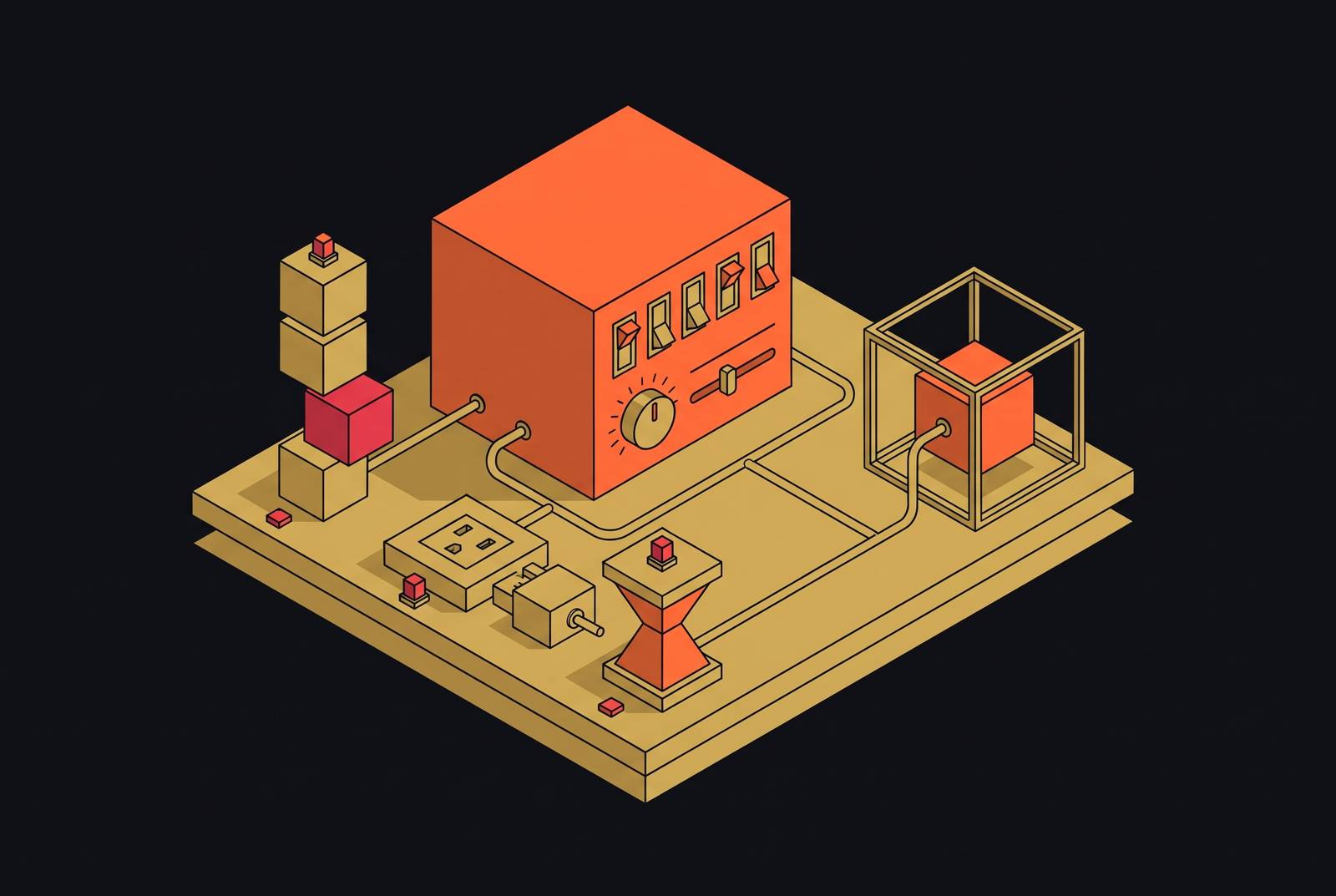
To test integrations against stateful APIs without hitting production, use a simulator that persists changes across calls, enforces valid operation sequences, and resets to a known state on demand. Treat it as first-class test infrastructure, like a database or message queue, with configurable faults, isolated CI execution, and continuous verification against the real API. Response fixtures alone cannot show that a multi-step workflow works.
Why stateless mocks cannot verify multi-step integrations
The mock test goes green, then the production deployment fails. The real API enforces a relationship or changes state in a way the test never modeled. Treating stateless mocks and stateful simulators as interchangeable is a category error. Payment lifecycles, webhook-driven pipelines, and multi-turn agent tool use all depend on what happened in earlier calls, while a stateless mock returns its configured response without remembering those calls.
Consider a test that creates a customer, creates a subscription referencing that customer, then retrieves the subscription and checks the relationship. A mock passes because its response bodies look consistent. It cannot establish that the customer was persisted or that the subscription actually references it. A stateful simulator passes only when creation, persistence, and retrieval succeed in sequence.
Spec-derived mocks inherit the accuracy of the OpenAPI document, while handwritten mocks inherit the author's understanding when the fixture was written. Neither, without cross-request state, can enforce that a resource created in the first call exists in the third. They can test how code handles a response, but not whether preceding operations made that response valid.
What "stateful" actually means across the four levels of simulation fidelity
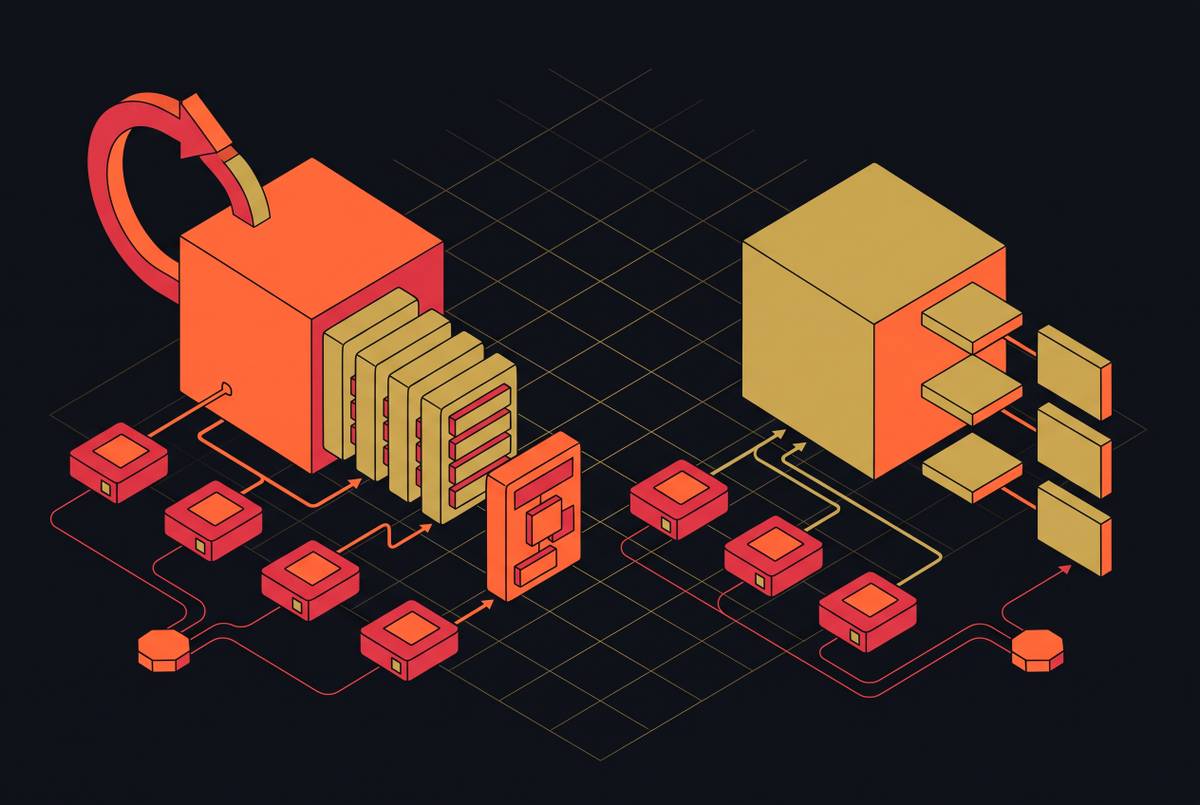
Four levels provide a useful mental model for simulation fidelity. Level 1 is static, with one configured response per route and no memory between requests. Static responses are appropriate for unit tests and insufficient for verifying dependent integration calls. Level 2 adds conditional responses that change with the request parameters. The output varies, but there is still no cross-request memory.
Level 3 adds in-memory state that lasts from one call to the next. Created records appear in later list requests, and a posted resource can be retrieved again. This establishes persistence, but persistence is not the whole contract. Level 4 adds state machines, webhook events when state changes, and wire formats that match the real API on both success and failure paths.
A capture call must change a payment from pending to captured, and a later GET must return captured. Invalid transitions need equally precise behavior. A withdrawal larger than the current balance must return a 400 with the correct error body, while canceling an already-completed order must reach the appropriate 409 conflict path.
A practical discriminator is to create a resource, mutate it, then retrieve it. If retrieval returns the pre-mutation value, the tool has not demonstrated stateful behavior, whatever its marketing label. A “sandbox” label alone establishes little about capability. The central distinction is between interface simulation, which reproduces the shape of a response, and behavior simulation, which reproduces the cumulative reality of sequential calls.
What first-class infrastructure status requires from a simulator
Resources created in one request must remain retrievable, listable, and mutable within the same session without special configuration for each test. State must also be disposable on demand. A dedicated reset endpoint must return the simulator to a known starting point without a server restart, even midway through a suite when one case needs isolation.
That reset contract prevents accumulated test data from contaminating later runs. Without it, shared environments that run for weeks collect state that lets one team's activity affect another's results. Realistic seed data serves a different purpose. It exposes pagination, filtering, and ordering behavior from the first run, rather than limiting tests to creation against an empty environment. Structurally valid placeholder strings and sequential IDs can conceal layout problems and ordering bugs.
Latency, error responses, 503s, and partial payloads must be configurable per request. The environment must also run in CI without live credentials or dependence on provider rate limits. Finally, continuous fidelity verification must compare the simulator with the real API before every release. Without that check, dependable execution can conceal an increasingly inaccurate model.
How fault injection exposes failures that happy-path simulators hide
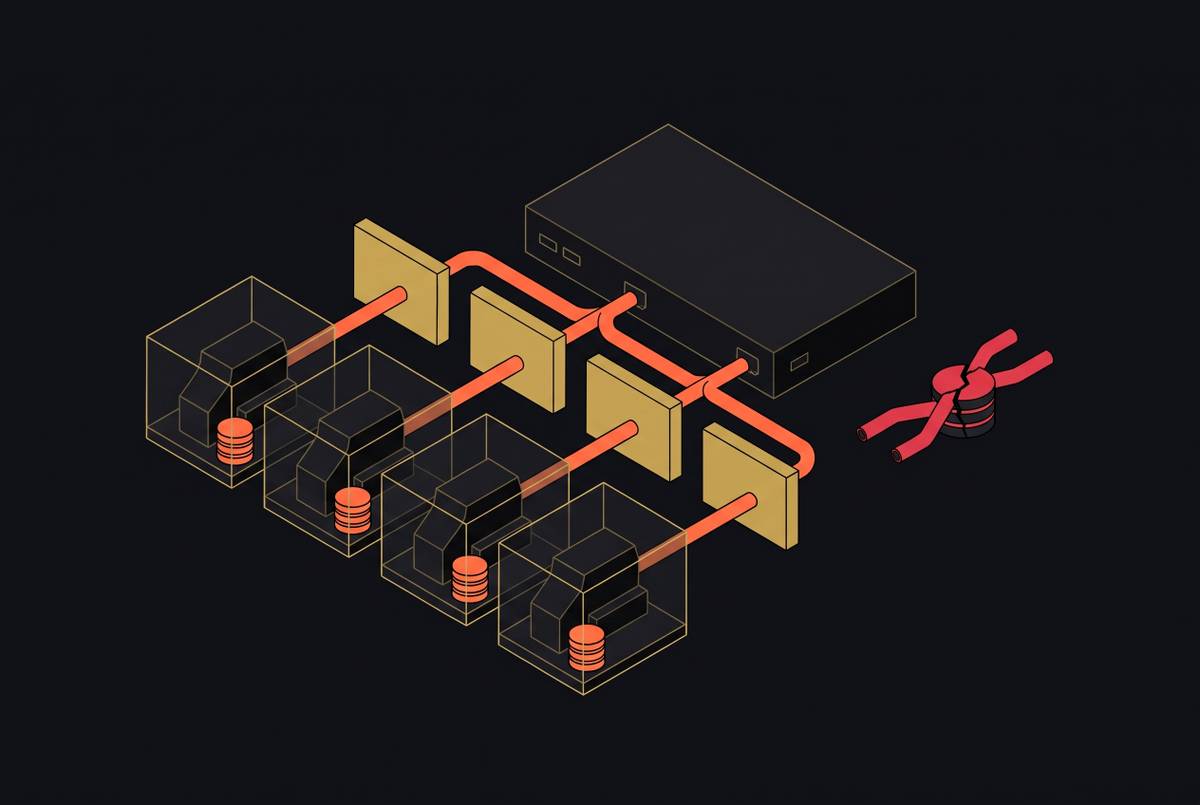
Tests that follow a successful response path leave most fault handling untested. The most dangerous failure may not crash the integration at all. It may silently corrupt state, skip a retry, or accept an incomplete response as valid. AgentChaos found that fault injection could lower pass@1 by roughly 50 percentage points, and failures that raised no error did the most damage.
For practitioners, the recommended sequence starts with HTTP 429 responses. Rate limits from payment processors, CRM APIs, and telephony providers quickly expose whether retry handling exists. Timeouts come next to reveal missing circuit breakers, followed by partial payloads to expose missing schema validation. Duplicate events then test whether idempotency handling prevents repeated processing.
A simulator can emit a webhook when a resource changes state, then replay that event with a delay or as a duplicate. A stateless response fixture cannot establish the transition that caused the event. The test must therefore examine what the integration does after the fault. Running this fault suite on every PR merge makes regressions in recovery logic a release concern.
How to test stateful APIs in CI without touching live APIs
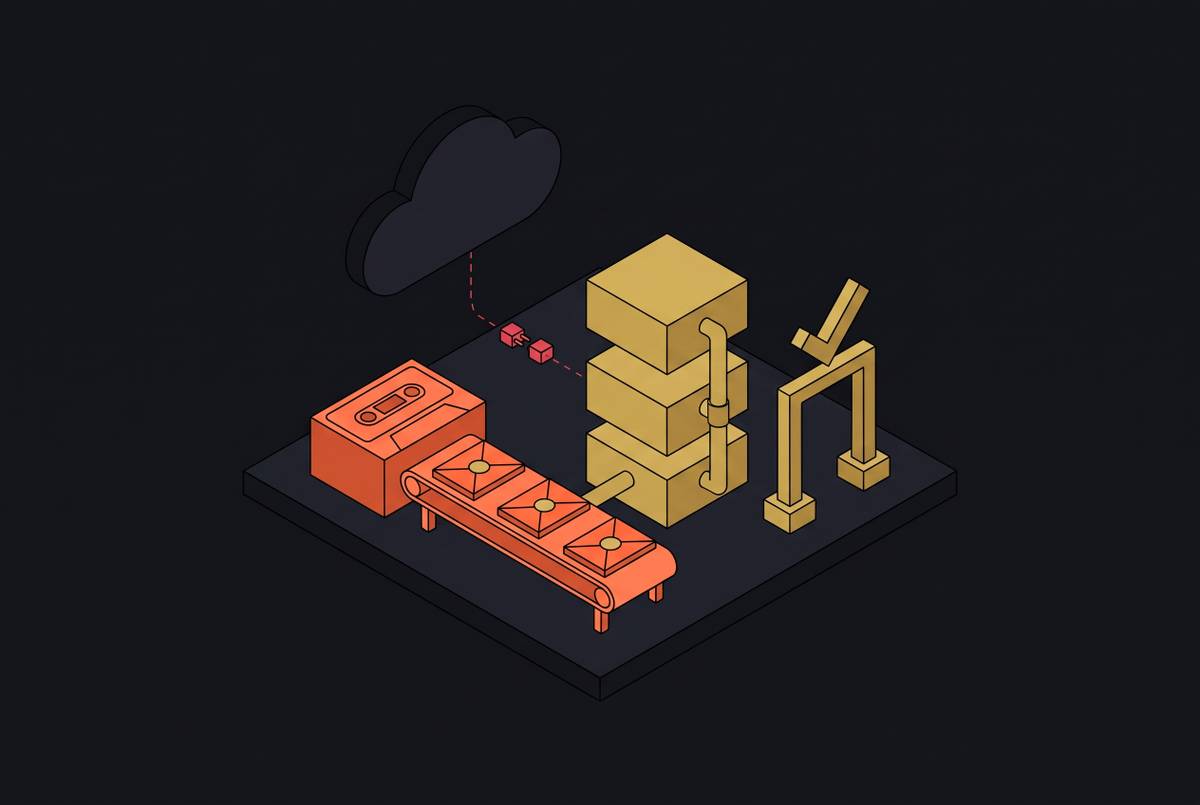
A CI-ready simulator starts, seeds data, runs stateful and fault scenarios, and resets without external network access, live credentials, or manual intervention. The standard pattern starts a container or local process during pipeline initialization. Fast smoke tests run on every commit. The full stateful suite, including fault injection, runs on PR merges, and all checks run before deployment to production.
Per-test isolation depends on the reset endpoint. Each case resets the simulator, establishes its starting state, executes its operations, and exits. There is no need for teardown scripts or dependencies on the order in which other tests run. Parallel execution uses a separate simulator instance for each worker, with state held in-process rather than in a shared database that concurrent runs could contaminate.
The simulator also removes live API secrets from these tests. It accepts syntactically valid credentials while reproducing the API's behavior, so CI needs neither live keys in environment variables nor their rotation policy. This also removes the risk that those credentials will appear in CI logs. For the suite to work as a gate, the pipeline must fail the build when pass rate, schema compliance, or fault-handling coverage falls below the set thresholds. Reporting a failure without blocking the build does not enforce that contract.
Why AI agents and RL training environments need stateful simulators more than traditional integrations do
An agent can produce a coherent answer while sending malformed JSON to a Stripe payment endpoint. Testing parameter extraction, endpoint selection, and response parsing requires a simulator that enforces the real schema and returns the appropriate errors for missing parameters and type mismatches.
Live APIs are unstable, costly, rate-limited, and non-deterministic across rollouts, making them unsuitable as the training environment described here. A simulator must produce deterministic behavior for the same action sequence and reset to a known state at the start of each episode. It must also scale horizontally across thousands of independent containers. The same isolation that supports parallel CI workers therefore supports parallel training environments.
Using a large model to simulate API responses from documentation introduces variability into the environment itself. When identical action sequences produce different simulated behavior across rollouts, that variability corrupts the training signal. Determinism belongs in the environment even when the client is non-deterministic.
Traditional application retry logic is deterministic, while an agent's response to a 429 or partial payload depends on its training. An unfamiliar fault can lead it to skip a retry silently. For that reason, fault injection must be present during training as well as evaluation.
How simulator drift silently undermines fidelity over time
Even a well-built simulator can become an inaccurate reference. The real API may add a field, change an error code, or alter a state transition without the simulator reflecting that change. Fixtures drift when implementation changes go unnoticed, and spec-derived mocks drift when documentation diverges from implementation. Stateful simulation is not exempt from this problem.
Silent drift is more dangerous than a broken simulator. A broken environment fails visibly and prompts repair, while a drifting simulator can keep passing tests against behavior the provider no longer exhibits. Continuous verification must therefore compare the simulator with the real API before every release, rather than rely on a periodic schedule or manual trigger. This is distinct from the application's isolated CI suite. The suite avoids live API dependencies, while verification establishes whether its simulated dependency remains faithful.
Pinned regression fixtures require deliberate handling when that comparison finds a difference. Drift detection should surface the mismatch, offer a new version with a reviewable diff, and require explicit opt-in migration, like a dependency update. Frozen fixtures preserve repeatability. Reviewed migration responds to changed behavior. Automatically updating fixtures conflates those functions and destroys regression-test determinism. Published verification results make the discrepancy visible to users, giving the fidelity score the role of a database health check.
Applying the full infrastructure model to a concrete multi-step integration
A payment integration brings these requirements into one sequence. The flow creates a Stripe customer, attaches a payment method, charges it, receives the webhook confirming capture, attempts a refund, and asserts the final state. It comprises six steps, four state transitions, and one asynchronous event. The test begins with a reset and realistic seed data so its starting conditions are known and independent of an earlier run.
Creating the customer must leave a resource that later calls can use. Attaching the payment method must persist the association, so the charge can reference the correct customer and method. Matching fixture bodies cannot establish either relationship. When capture changes the payment state, the simulator must generate the corresponding webhook. A response fixture that looks like a captured payment does not test that asynchronous link.
Fault injection then challenges the webhook handling with delayed, duplicated, or out-of-order delivery. The integration's response must be evaluated against the resulting state. Refund behavior introduces another sequencing constraint. If the charge has already failed, the simulator must enforce the right conflict response. The final assertion tests the outcome of the sequence that actually ran.
Running this flow in an isolated CI instance removes the need for a live Stripe sandbox account, live credentials, and external network access. That portability makes the sequence repeatable, but does not establish its accuracy. Pre-release fidelity verification must still detect behavior that Stripe changed and the simulator has not adopted. Otherwise, the whole flow can pass against a contract that is out of date.
The same dependency appears when a GitHub integration closes and reopens an issue or a Slack integration pins a message and retrieves channel history. Later reads must reflect earlier operations. Identifying the longest multi-step flow in the current integration and running a four-step test against the current tool provides a practical starting point. Create a resource, mutate it, GET it, and assert that the mutation persisted. Failure is the signal to move from response mocking to a stateful simulator.