Slack Integration Testing for Bots and Workflow Automations
A stateful simulator catches Slack bugs that mocks and live workspaces miss.
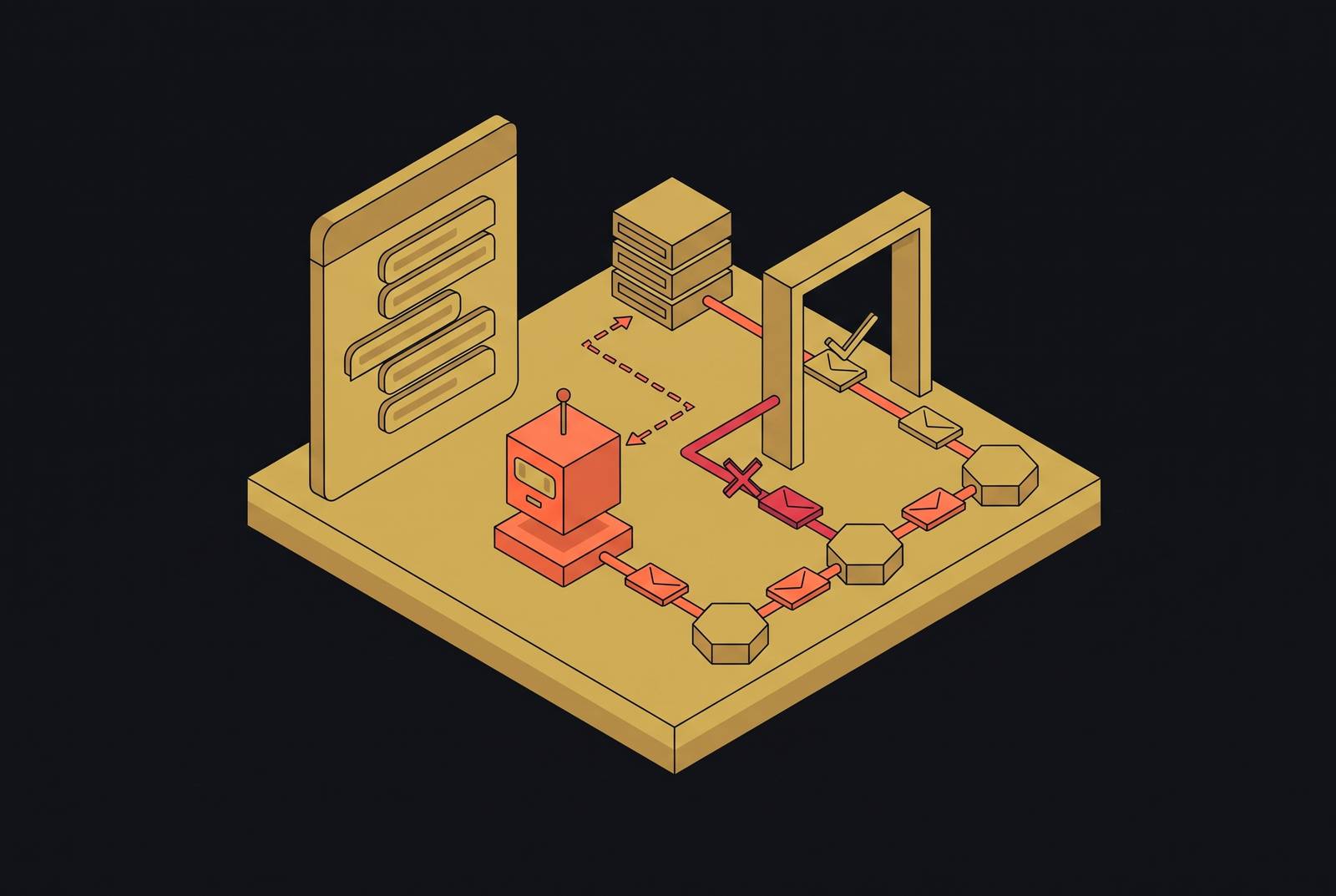
Integration testing against stateful APIs requires a simulator that preserves the effects of sequential calls, so each operation sees the state left by earlier ones. For Slack bots and workflow automations, that means modeling channels, messages, threads, and reactions. Stateless mocks belong in unit tests, while a stateful simulator provides the integration layer without making a live workspace a development dependency.
Why testing Slack bots against a live workspace is structurally broken
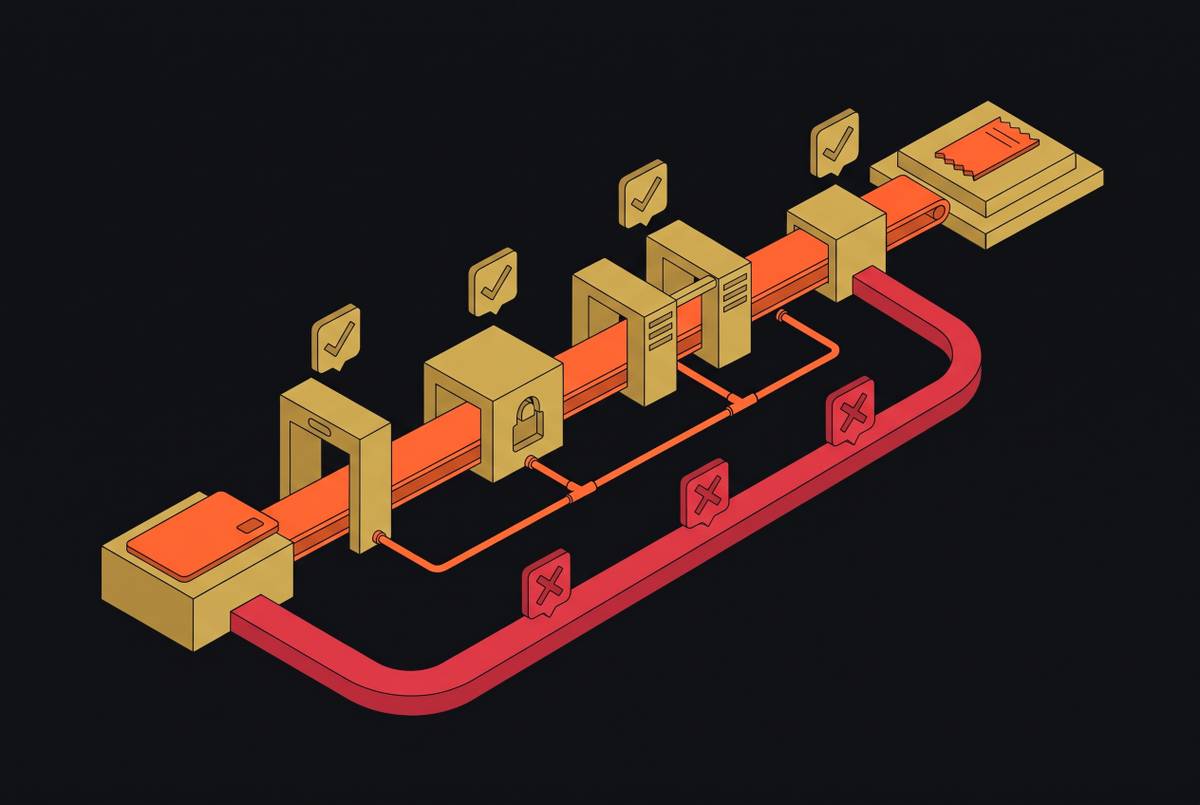
Slack can reject invalid Block Kit blocks even when it returns HTTP 200. The response body reports ok as false and error as invalid_blocks, with details in response_metadata. The message is rejected outright. A test that checks only HTTP status misses the failure. Contacting the real API therefore does not, by itself, establish that the bot accomplished its task.
Every iteration requires an API call, every investigation needs a real workspace, and every developer needs a test bot. Credentials become part of the testing infrastructure. Slack introduced Steno in 2017, then archived it in June 2022 with a promise to “stay tuned for updated testing tools.” The four-year gap that followed reflects a missing platform capability.
What developers have been doing to work around the gap, and why each workaround falls short
Duplicate test bots are a rational way to separate development traffic from a working bot. A developer copies the manifest, uses ngrok, and replaces the endpoint URL. The dependency remains live, however. Each test run still needs a connection, and coordinating separate bots and endpoints makes the arrangement fragile as development expands. Separation reduces interference but does not produce a repeatable local environment.
Patching urllib.request.urlopen in Python attacks a different part of the problem because the Slack SDK uses it internally. This can isolate calls, but it couples tests to SDK implementation details that can change during an update. Real API tests take the opposite trade-off. They retain actual Slack behavior at the cost of network access, valid CI tokens, and workspace side effects, including messages posted into team channels.
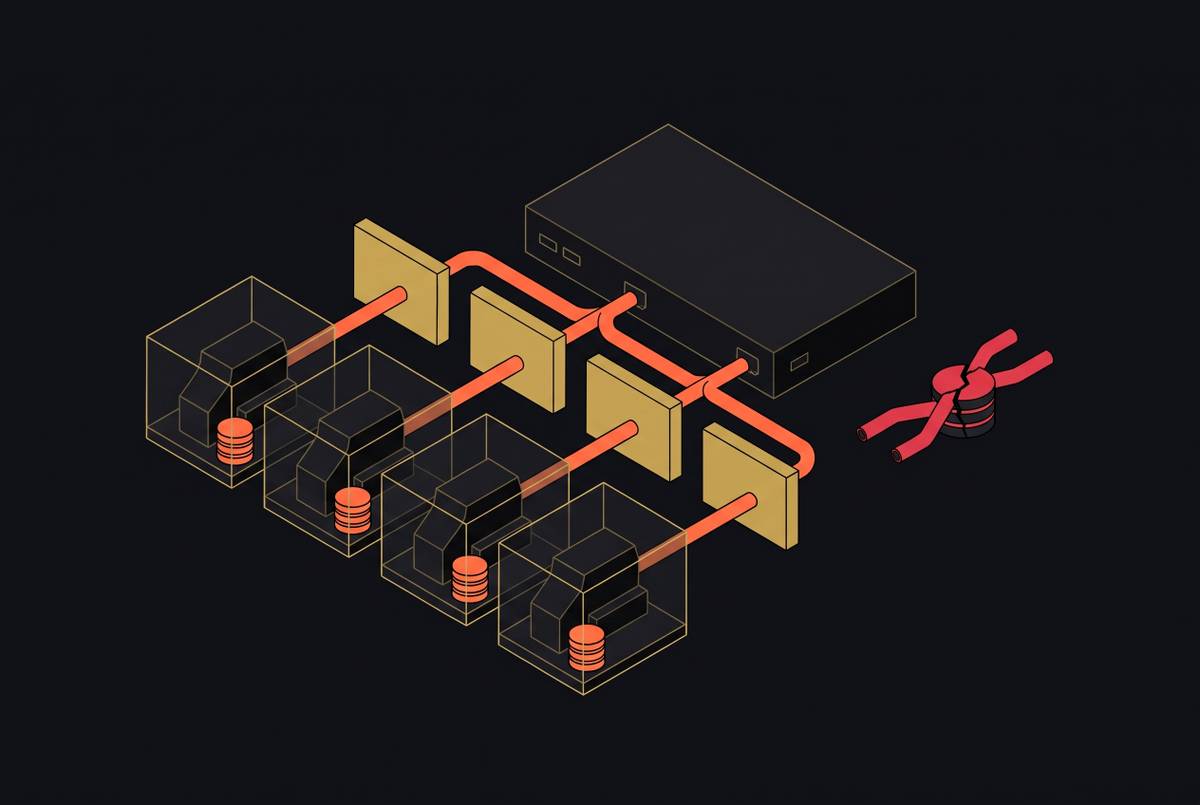
Driving the Slack web UI with Cypress extends testing through the interface, and teams have documented that approach. It also adds UI fragility to the existing workspace dependency. None of these approaches models an evolving workspace locally. HTTP patches replace one call at a time, while duplicate bots, real API tests, and browser automation still call the live service as tests run.
The design fork that changes what bugs you can catch: stateless mocks versus stateful simulators
A stub supplies predefined responses so application code can run in isolation and its resulting state can be checked. A mock supports behavior verification by recording calls, arguments, and invocation counts. Neither inherently maintains an evolving Slack workspace. Python’s unittest.mock with AsyncMock and JavaScript’s jest.fn() are appropriate instruments for testing handler logic, but fixed responses do not establish relationships among messages, threads, channel membership, or OAuth operations.
A bot may reply after a parent message was deleted, use a stale trigger_id, or interact with a channel archived between calls. These failures depend on the workspace’s state as well as the shape of the response. A stateful simulator retains channels, messages, threads, reactions, and users, so adding, replying to, and deleting a message changes what subsequent operations can do.
A stateless mock can return not_in_channel, already_reacted, message_not_found, name_taken, or expired_trigger_id when instructed, but it cannot derive them from workspace transitions it does not model. The test author has supplied the answer. A simulator tests whether the application’s own actions lead it into an invalid state. Similarly, a missed bot_id filter can be tested as handler logic, while its consequence, a bot repeatedly replying to itself, requires an event sequence to exercise.
How can developers integration-test Slack APIs where order of operations matters?
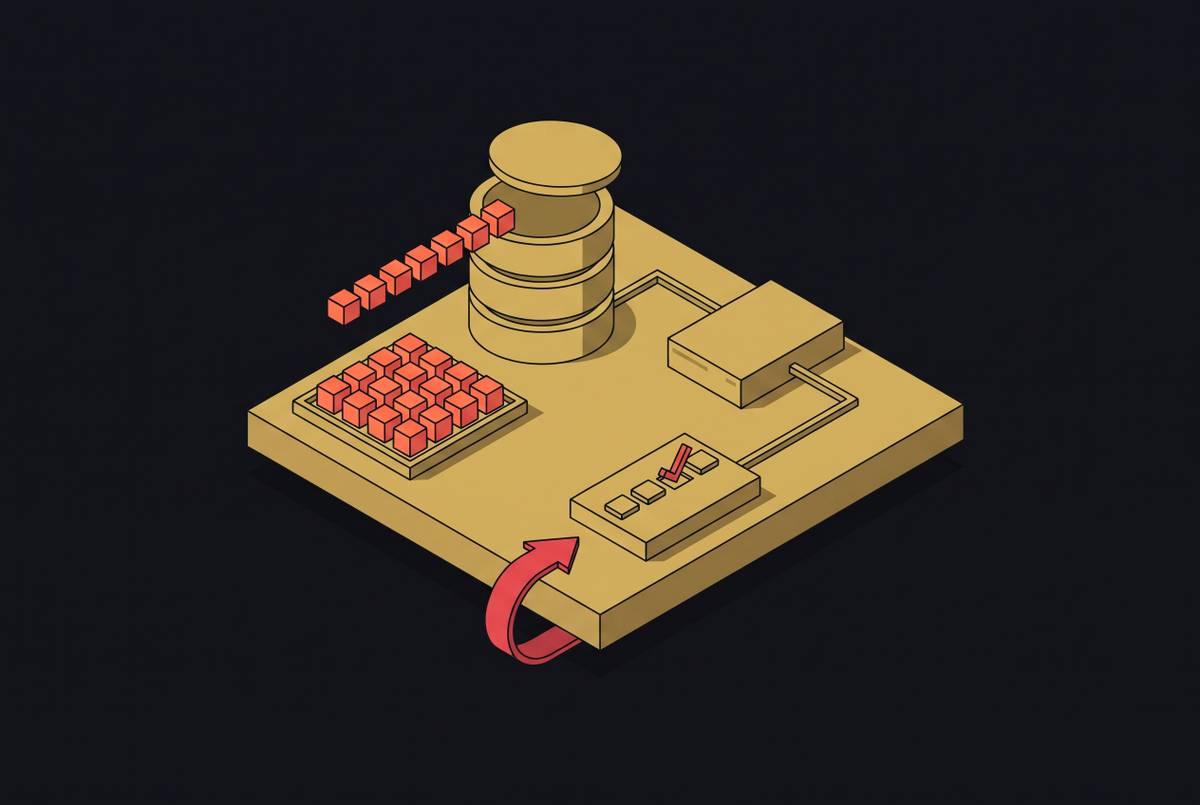
@emulators/slack, from the vercel-labs/emulate project, implements stateful emulation of the Slack Web API, OAuth v2, and Incoming Webhooks for local development and CI. It models the channels, messages, threads, and reactions in a workspace. That scope extends beyond response substitution. It gives successive application calls a shared environment in which their effects can accumulate.
slack-mock, from desplega-ai/slack-mock, exposes operations that represent human actions. Its API includes postMessage, editMessage, deleteMessage, addReaction, removeReaction, slashCommand, clickButton, and submitView, plus startAssistantThread and changeAssistantContext. Observation is a separate concern. Its surface includes messages, thread, ephemeralMessages, findMessages, waitForMessage, apiCalls, waitForApiCall, and deliveries, allowing a test to examine both calls and their visible results.
The minimal test shape is straightforward. Start the server, point the real Bolt app at it by changing an environment variable, use postMessage as a human user, then use waitForMessage and thread to examine the reply and its ancestry. This needs no Slack credentials or external network access. Pre-seeded channels, users, existing threads, and reactions make the scenario more representative than an empty workspace.
Delivery behavior also belongs in the model. slack-mock posts signed events with X-Slack-Request-Timestamp and X-Slack-Signature, using the v0= HMAC-SHA256 scheme. Events API deliveries are retried after non-2xx responses, timeouts, or refused connections, with X-Slack-Retry-Num and X-Slack-Retry-Reason. Slash commands and interactivity are posted only once. These differences let integration tests go through the bot’s actual event boundary.
How to structure a Slack bot testing pipeline so each layer does the right job
The first layer should run stateless unit tests on every commit to test handler logic on its own. The event-shape matrix should be reviewed before test code is generated. Similar payloads are not interchangeable. app_mention and message share fields but differ subtly, bot messages include bot_id, and buttons on older messages may contain stale value data. Reviewing inputs and expected results first helps prevent a wrong assertion from becoming accepted coverage.
This layer must also test rejection of invalid signatures and replayed timestamps. The endpoint is internet-facing, and signature verification is the gate against forged events. These tests check whether the handler lets through requests it should reject, independently of whether its reply logic works.
The second layer should run the real Bolt app against a stateful simulator at the PR merge gate. Fast unit tests belong in pre-commit checks, full unit and integration tests at the PR gate, and integration tests with emulated dependencies in the build stage. Nightly runs can cover end-to-end and load passes. Agentic tools belong in analysis, coverage planning, and case generation, while deterministic frameworks own execution.
The third layer is an optional end-to-end test in a live workspace before production. A dedicated test workspace can support a final smoke test, but its credentials and slower execution should not govern daily development. Contract validation should precede test execution at every relevant gate. Otherwise, code may change while the event schema or API contract remains stale, causing tests to diagnose the wrong incompatibility.
Fault injection: testing what happens when the Slack API misbehaves inside a running workflow
A simulator that always succeeds cannot show how well a bot handles failures. Fault injection must operate inside a running workflow, where failures interact with state that earlier calls created. slack-mock exposes injectFault({ method, error, httpStatus, retryAfterSec, extra }) as a test operation. It also provides disconnectSockets("refresh_requested") for exercising Socket Mode recovery. These controls make failure timing part of the scenario.
Returning expired_trigger_id tests the error-handling branch, while allowing a trigger to become stale tests whether the workflow reaches that branch at the correct point. Ordering is equally important for thread replies. Deleting a parent between calls can cause message_not_found, and disconnecting a socket tests whether it reconnects without losing in-flight events. A 5xx response with an HTML body exercises parsers that wrongly assume every response is JSON.
Faults should be tested both in isolation and in combination. A 429 during a thread reply while a modal’s trigger_id is expiring needs an environment that keeps track of both states at once. Single-fault tests do not establish behavior under that combination. Nor is the absence of an exception sufficient evidence of recovery, because a bot can continue processing after a failed operation if it never validates the result.
Why this problem compounds when the Slack bot is an AI agent calling tools
An LLM agent adds non-deterministic tool selection to an already stateful workflow. A tool call changes Slack, its result guides the next decision, and that decision leads to another call. Fixed successful responses conceal the fragile parts of this loop. Capability benchmarks that assume correct, timely tool responses leave resilience under realistic failures untested, while live workspaces make repeated experiments dependent on credentials and mutable external state.
AgentCheck describes a reproduce-intervene-mitigate workbench for agents over MCP, allowing developers to stress-test faults and test a fix against a specific failure. MCP-Injector provides protocol-aware injection with permanent, transient, and intermittent faults on seedable schedules. Its findings distinguish capability from fault tolerance. Far fewer tasks are completed when most faults are permanent, and greater scale does not help agents handle failures.
AgentChaos injects faults into LLM API responses at runtime without changing agent source code. Its August 2026 findings across five agent systems show that silent degradation does the most damage, more than noisy crashes. An ICML 2026 paper makes the related case for separating consistency, robustness, predictability, and safety instead of treating one success rate as a sufficient reliability measure.
The Slack-specific test environment already has the necessary event surface. slack-mock supports assistant_thread_started and assistant_thread_context_changed, which can be combined with injectFault to run the agent tool-call loop against the same simulator used for human-driven bot tests. The infrastructure does not need a separate foundation. Training environments intensify the same requirements through deterministic state, controllable faults, and horizontal scaling across parallel runs.
A simulator can drift into returning a structurally valid response that the real API would no longer return in that state, leaving application tests green while hiding incompatibility. Continuous verification is therefore a simulator requirement. It means testing against the live API before every release and publishing versioned fidelity scores, with realistic seeded histories.
That requirement separates verification of the simulator from execution of the application suite. Open-source projects such as slack-mock and @emulators/slack provide valuable starting points, but their verification cadence depends on community maintenance. Adopting teams consequently retain responsibility for monitoring drift rather than assuming that statefulness alone guarantees fidelity.
Putting it together: a Slack bot testing stack that works without a live workspace
The practical stack assigns each dependency the narrowest useful role. jest.fn() or AsyncMock tests handler decisions and event shapes, including unconditional signature-verification coverage. A stateful simulator tests sequential behavior and faults at the integration layer. A dedicated workspace can be used for an optional final smoke test, while routine development runs without it. Fault scenarios belong in the simulator because repeating them against live Slack introduces side effects and cleanup.
The resulting developer experience is the acceptance test for the architecture. Confidence then comes from observable workflow results. The workspace stops being a prerequisite for development and becomes a modeled dependency that tests can control.