Exponential Backoff and Jitter for Third-Party API Retries
Exponential backoff alone cannot prevent cascading failures without jitter and idempotency.

Exponential backoff and jitter for third-party API retries are parts of a system in which formula choice, error classification, server signals, retry budgets, and idempotency must work together. If any one fails, retries can amplify the outage they were meant to survive. A reliable design therefore needs both controlled failure testing and production measurements that distinguish recovery from repeated, unproductive work.
Why retry logic fails at the system level, not the request level
Truto passes Jira integration errors through to the caller, leaving retry logic to the application. A naive loop hammering a throttled endpoint can crash background workers and take down the core product. In a multi-tenant architecture, one customer’s misbehaving sync job can also exhaust the shared rate-limit quota for other customers. The failure is therefore not confined to the request that first encountered throttling. It spreads through shared capacity.
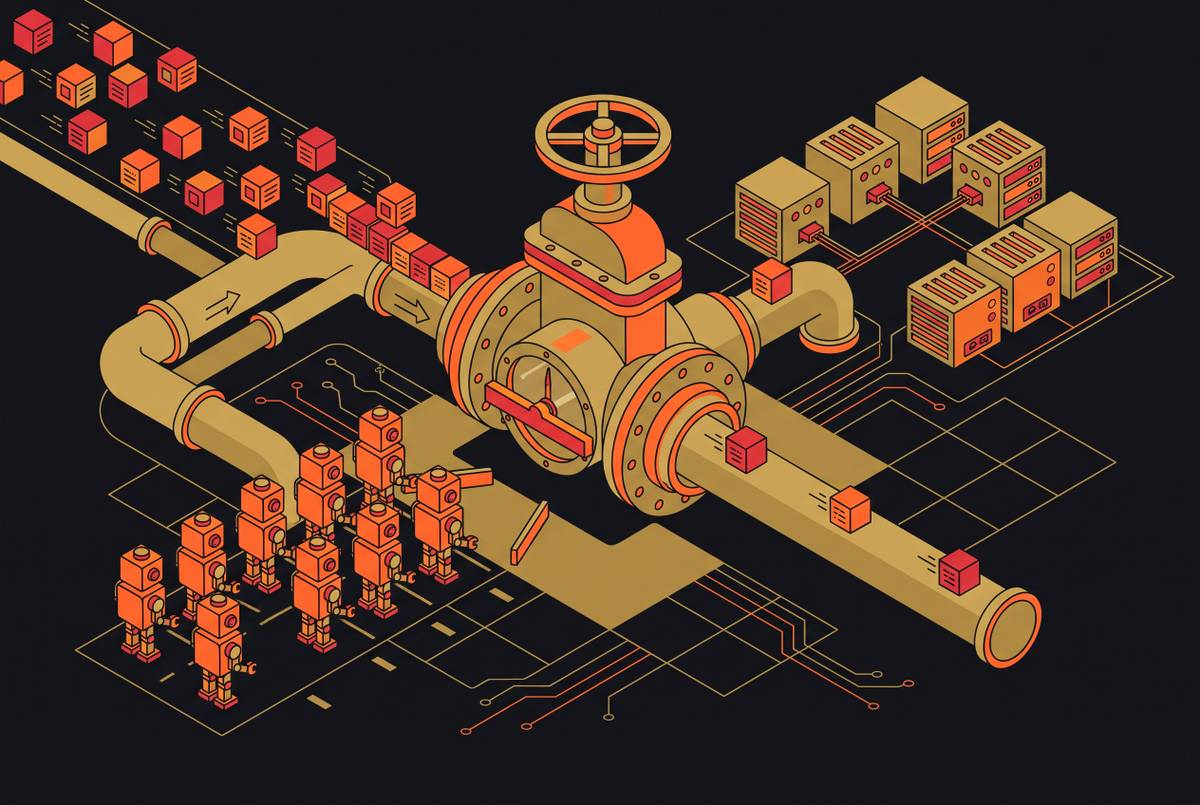
When many clients fail together, deterministic delays make them retry in synchronized waves, creating a thundering herd precisely when downstream capacity is lowest. Independent retries at several tiers compound the load because each upstream attempt can trigger more attempts below it. A service that is about to recover then gets another surge of requests when it needs less load. Adding retries without coordinating these decisions can extend and deepen the outage.
Which failures are worth retrying and which make retries harmful
Classification comes before timing because not every failure can improve with another attempt. Transient 5xx failures are candidates for retries, while throttling requires a response to the provider’s rate-limit signals. By contrast, 400 Bad Request, 401 Unauthorized, and 403 Forbidden signal client bugs or invalid credentials. Repeating those requests wastes resources and can get the account suspended. A policy that retries every non-200 response is therefore a bug, regardless of how carefully it spaces attempts.
Retryability depends on both what the request does and what status code comes back. A POST that charges a credit card must not be retried without an idempotency safeguard, because repeating it can create another charge. The response may suggest a temporary failure while leaving the operation’s outcome uncertain. Error classification must separate failures that may recover from operations that are unsafe to repeat. No choice of delay repairs that distinction after the retry has already caused damage.
The four backoff formulas and why full jitter is the right default
Exponential backoff reduces retry frequency by increasing the wait between attempts. Its deterministic form is sleep = min(cap, base * 2^attempt). The cap bounds the delay, but clients with the same schedule still wake together. This addresses retry volume without resolving synchronization. Jitter adds the randomness needed to spread those attempts across time.
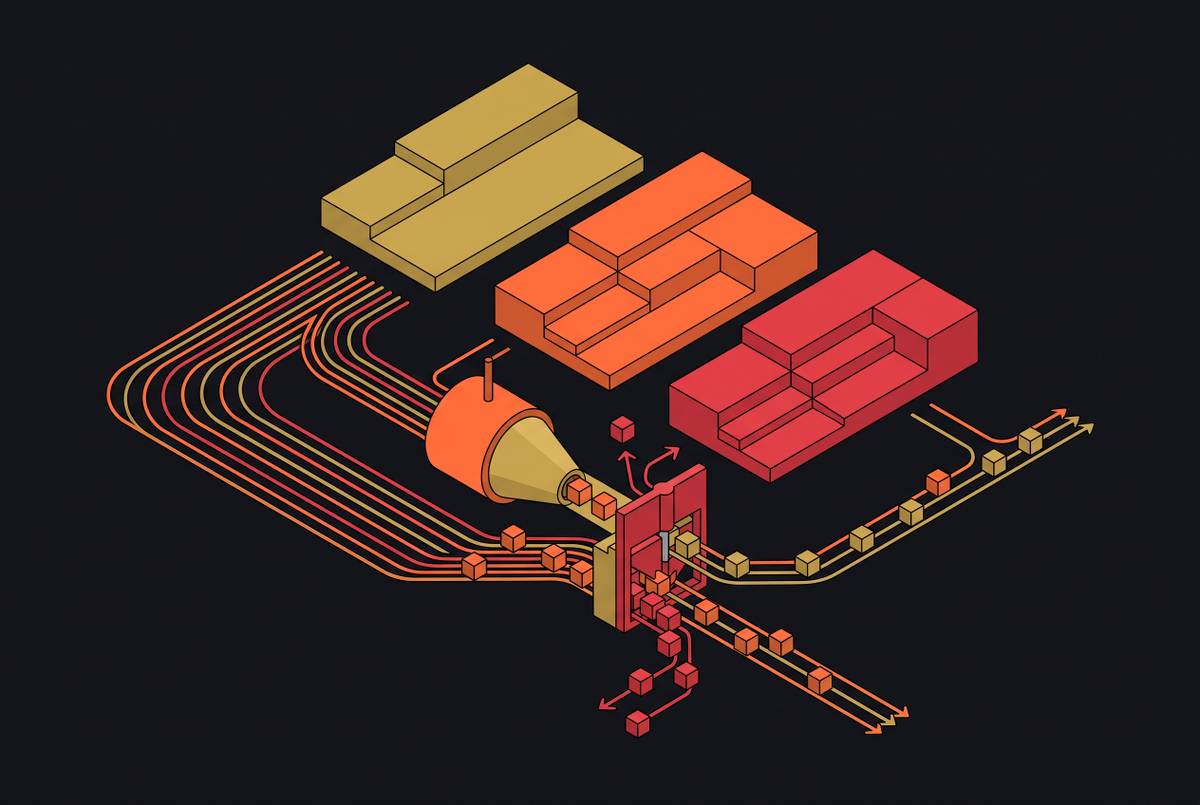
Full jitter uses sleep = random(0, min(cap, base * 2^attempt)). It randomizes the entire wait window, flattening synchronized spikes. Equal jitter first calculates temp = min(cap, base * 2^attempt) and then uses sleep = temp/2 + random(0, temp/2). That retains a minimum wait while still separating clients, which is useful when guaranteed spacing matters operationally. The trade-off is that randomness occupies only part of the window.
Decorrelated jitter instead uses sleep = min(cap, random(base, prev_sleep * 3)). It derives each delay from the previous sleep rather than the attempt number and can spread load further in some fleet configurations. Full jitter remains the right default for most production scenarios because it spreads retries across the whole available interval. A short base delay allows a quick first retry, while a cap tuned to the upstream SLA gives the service more time to recover before later attempts.
How Retry-After headers override your backoff calculation
A client’s calculated delay cannot take precedence over explicit server backpressure. When a response includes Retry-After, its value sets the minimum wait, so the next attempt must not occur earlier even if the formula produces a shorter delay. Ignoring that instruction can slow requests and get the account suspended or lead to IP bans. The client must parse both integer seconds and HTTP-date values. A small jitter buffer above the requested wait keeps clients from all retrying at the exact instant the window reopens.
Provider signals also differ in meaning, so recognizing a header is not enough. Shopify uses Retry-After in seconds, while GitHub supplies X-RateLimit-Reset as a Unix timestamp. HubSpot’s X-HubSpot-RateLimit-Daily-Remaining reports remaining daily capacity.
Kalshi illustrates the limit of relying on such guidance. Its token-bucket model, switched 2026-04-23, has seven tiers and two independent buckets per tier, but sends no Retry-After header, and the SDK hard-fails instead. The client must track the rate model on its own. Server guidance can override local timing only when the provider supplies it.
Retry budgets and circuit breakers as system-level controls
Even well-spaced retries can overwhelm a dependency when enough callers participate. Per-client backoff governs one caller’s timing, while retry budgets bound the collective extra work. Budgets also expose multiplication between layers, such as a job framework retrying messages while application code retries each request. Prefer a single place to decide retries, with a dead-letter escalation path carrying an operator payload when the dependency is unhealthy. Otherwise, independent policies can conceal the total number of attempts.
Circuit breakers address sustained failure alongside retries for transient faults. In CLOSED, requests flow normally and failures are counted. In OPEN, the breaker fast-fails and makes no outbound calls while it waits for the cool-down period to end. In HALF-OPEN, it allows one probe, whose success returns it to CLOSED. This suppresses work that would otherwise accumulate against an unhealthy dependency.
For background processing, persistent queues such as RabbitMQ, SQS, and Redis Streams separate retry timing from the application lifecycle and allow work to survive restarts. Visibility timeouts support this approach, although Redis Streams requires client-initiated reclaim through XAUTOCLAIM. This avoids tying delayed webhook deliveries or batch syncs to in-process sleeps.
Idempotency keys as the correctness prerequisite for retries
Retry logic worked, but the retry request omitted the idempotency key. The gateway processed both the original request and the retry, causing a double charge. Fault injection caught this correctness bug before production. Neither a longer delay nor a stricter retry budget would have made the duplicate operation safe.
An idempotent operation gives the same result whether it is called once or many times. HTTP GET, PUT, and DELETE are idempotent by semantics, while POST can create duplicates when repeated. For a state-changing operation that needs an idempotency key, the client generates one unique key per logical operation. It sends that key on every attempt, and the server stores it and returns the same result for repeats. The key joins the attempts into one operation.
Provider rules remain part of this contract. Stripe documents a maximum length for idempotency keys and directs developers handling conflicts to retry manually with the same key and parameters. Where possible, prefer PUT with a client-generated resource ID, which makes the operation idempotent at the protocol level.
Fault injection as the only way to verify retry behavior before production
A policy is not verified merely because its retry loop, timeout, and circuit breaker each pass an isolated test. The key failures happen where these parts meet, when one changes the conditions another relies on. The payment case demonstrates why the full sequence must be exercised, including the contents of each repeated request. A breaker can also trip as it should while its HALF-OPEN probe still relies on the same overloaded thread pool, a resource interaction that the state transition alone leaves hidden.
Fault injection makes those interactions testable before production. The test matrix must cover transient 5xx retries, fast-failure on non-retryable 4xx responses, breaker trip and recovery, Retry-After handling, idempotency keys on every attempt, and budget enforcement under sustained load. These cases test whether the controls cooperate and distinguish timing behavior from correctness and aggregate-load behavior.
Network-level tools cover part of that surface without modifying application code. Toxiproxy injects latency, bandwidth limits, and connection resets at the TCP proxy layer. Chaos Mesh injects latency, packet loss, and network partitions in Kubernetes environments. Those faults exercise transport behavior, but validating response sequences and resource state also requires control at the API level.
Why testing retry logic against live APIs or static mocks both fail
The first request might return a 503, the second a 429 with Retry-After, and the third a successful response containing a resource ID needed by the next call. A static mock that returns the same fixture on every call cannot follow that sequence. The same limitation appears in polling, where a resource should move from pending to complete. A fixed status makes the loop stop at once or run forever, so it never shows the intended transition.
Live APIs offer real behavior but not controlled failure conditions. Test runs share their rate limits, their credentials must be managed, and payment retry tests can cause real charges without idempotency controls. They cannot cleanly provide faults on demand or repeatable sequences. Asynchronous payment flows add another requirement because the synchronous response must be followed by a webhook delivery seconds later. Along with a plausible response body, the test environment must keep track of earlier calls, move resource state forward, and time the events that follow.
What a stateful, fault-injecting simulator gives retry testing that nothing else does
A stateful simulator combines the memory and fault control needed to test the retry system as a whole. It can model adding a resource, polling its transition, and then returning a 409 when cancellation arrives after completion. It can also return a 503 on attempt one, a 429 with Retry-After on attempt two, and a 200 on attempt three. That sequence exercises delay calculation, server guidance, and preservation of the idempotency key together. When injected failures keep happening, the same environment can test retry budgets and how the breaker behaves.
An empty sandbox that returns 404 for every lookup cannot distinguish a recovered request that finds its resource from one whose resource never existed. Persistent test state makes those outcomes separable. A simulator hosted locally with no live credentials or rate limits also lets pipeline tests run in parallel with deterministic faults and results that can be repeated.
That control does not remove the need for fidelity. Regular cross-checks against the real API prevent silent drift, and Stripe notes that sandbox settings can diverge from live settings over time. AI agents and RL environments need the same discipline, with prior-call tracking, an enforced rate model, and controllable state producing deterministic outcomes for training or evaluation.
Observability signals that tell you whether your retry system is working or amplifying
Compare inbound request volume with useful work done, because a growing gap indicates retry-driven amplification. A rising retry rate can also show that a downstream service is getting worse before error rates fully spike. Standard error-rate dashboards do not make these distinctions on their own. Retry traffic needs deliberate instrumentation to expose the feedback loop.
Record the attempt number, elapsed time, status code, and correlation ID for every retry. Together, they distinguish a request that recovered after three attempts from one still spinning after thirty. Without that sequence, a final outcome hides how much time and load recovery consumed.
Circuit breaker trip events show when the system stopped retries as it should. Conversely, an absence of trips during a sustained outage suggests that the threshold is miscalibrated. These signals matter even after fault tests pass, because production conditions can move out of alignment with the configured delays, budgets, and thresholds. Operational control depends on measuring not just whether requests eventually succeed, but whether the retry system gives the dependency room to recover.